
How License Plate Recognition (ALPR) Actually Works
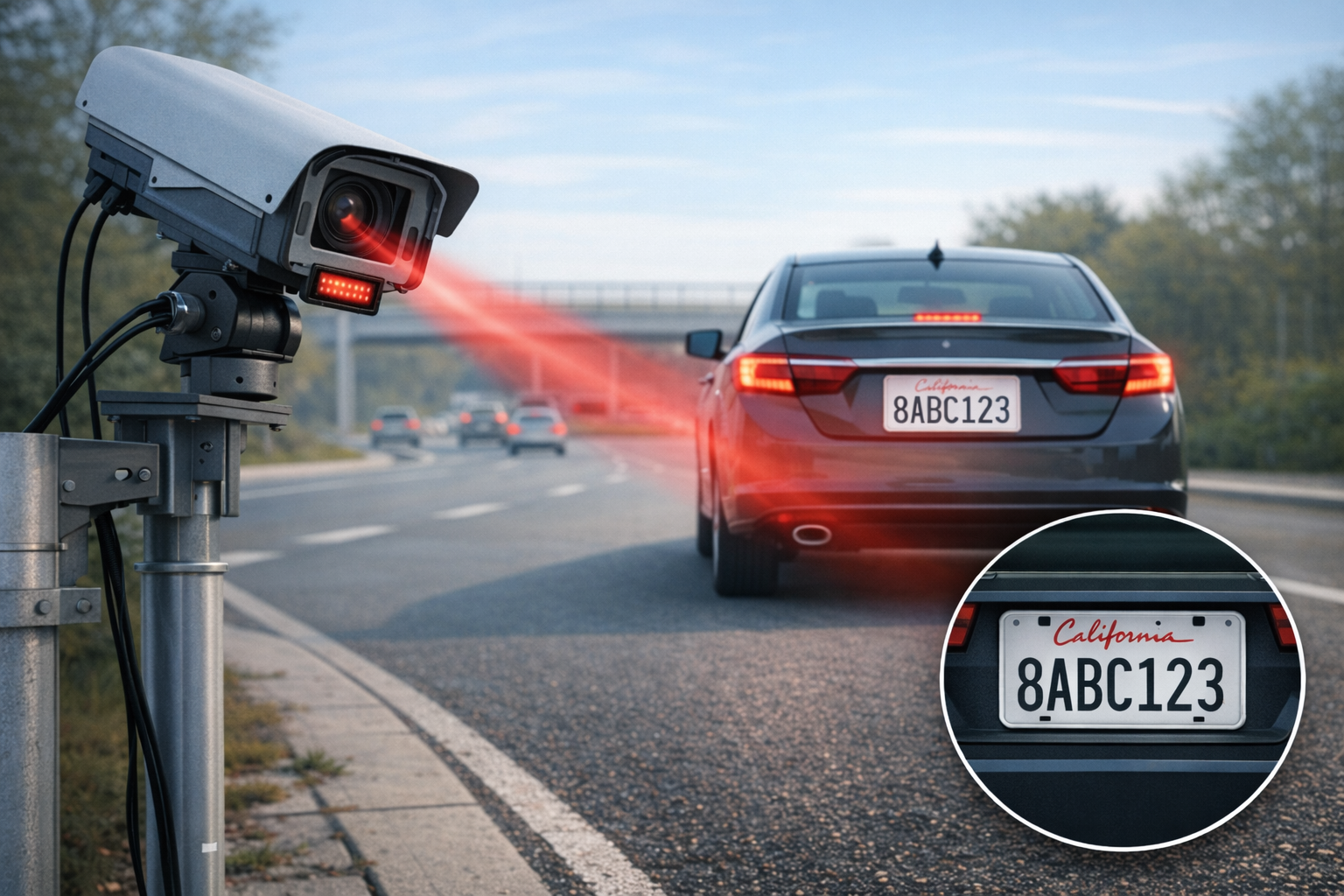
License Plate Recognition (ALPR) is one of those technologies that almost everyone has heard of, but very few people truly understand. It’s often described casually as “AI that reads license plates,” which is technically true—but also deeply misleading.
In practice, ALPR systems are a carefully engineered pipeline of optics, computer vision, heuristics, and tradeoffs. The quality of the result has as much to do with camera placement and physics as it does with machine learning. Understanding how these systems really work makes it much easier to separate real capability from marketing claims—and to reason about accuracy, misuse, and privacy.
This article walks through how modern ALPR systems actually function, end to end.
It starts with the camera, not the model
Most people assume ALPR lives or dies by the quality of the recognition model. In reality, most failures happen before any character recognition ever runs.
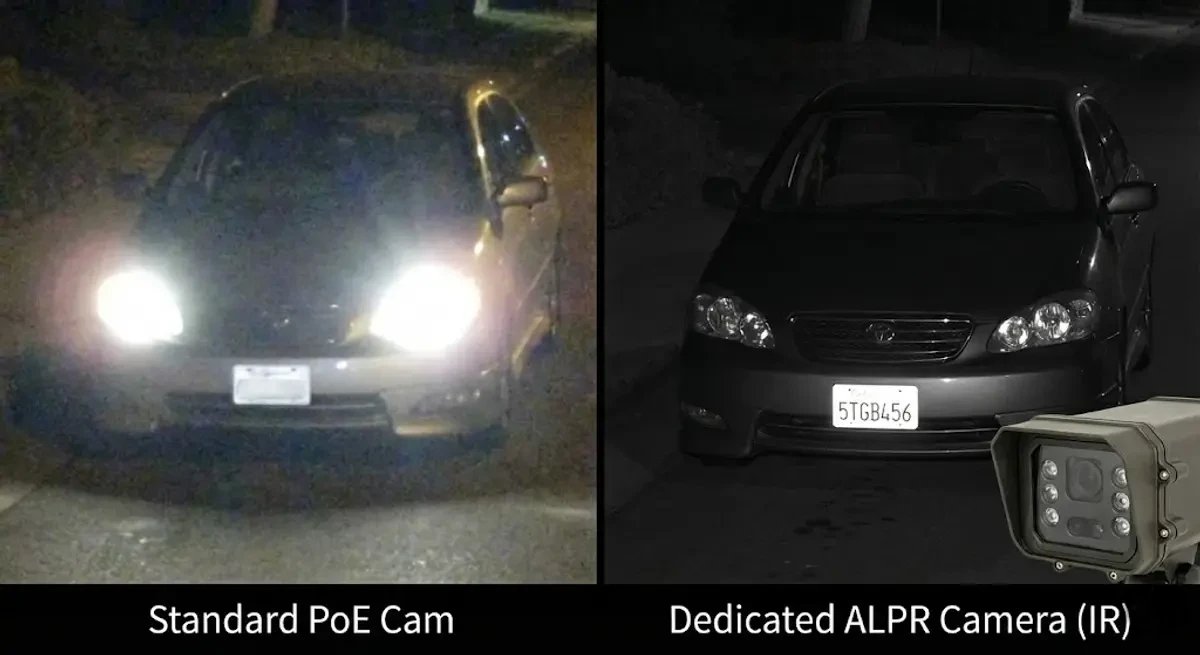
ALPR cameras are typically tuned very differently from general-purpose security cameras. They prioritize fast shutter speeds to freeze motion, controlled fields of view to maximize pixels on the plate, and lighting setups that reduce glare from reflective materials. Many systems rely on infrared illumination specifically because visible light introduces too much variability from headlights, sun angle, and weather.
This is why consumer cameras—doorbells, dash cams, even modern phones—tend to struggle with license plates. They’re designed to capture people and scenes, not reflective metal rectangles moving at speed. Even a relatively inexpensive camera can outperform a high-end one if it’s positioned correctly and configured for the task.
In ALPR, optics and placement quietly do most of the work.
Finding the vehicle comes before finding the plate
Once an image is captured, most systems don’t immediately look for text. Instead, they first identify the vehicle itself.
Detecting vehicles early allows the system to narrow the search space and avoid spurious detections elsewhere in the image. It also enables something that becomes important later: associating a plate with vehicle attributes like color, body type, or direction of travel.
Only after a vehicle is identified does the system search within that region for a license plate. This two-stage approach significantly reduces false positives and improves performance in cluttered scenes, especially in urban or multi-lane environments.
Plate detection is often harder than reading the characters
Actually locating the plate is one of the trickiest parts of the pipeline.
License plates vary widely in size, layout, reflectivity, and condition. Frames, bolts, dirt, decals, and covers all interfere with detection. Temporary paper plates introduce an entirely different set of challenges. Even within a single state, design changes over time can break assumptions baked into older models.
Plate detection models are trained to recognize visual patterns—rectangular shapes, reflective regions, typical placements—not the characters themselves. When those cues overlap with other elements on a vehicle, the system can confidently detect something that isn’t actually a plate.
This is why ALPR systems sometimes “read” bumper stickers or tailgate badges. From the model’s perspective, the geometry looks plausible.
Normalization is where accuracy is quietly made or lost
Once a plate is detected, the image usually isn’t passed directly into OCR. Instead, it goes through a normalization phase that rarely gets discussed outside engineering teams.
At this stage, the system may deskew the plate, correct perspective distortion, normalize contrast, suppress glare, and resize the image into a consistent format. In some cases, individual characters are segmented before recognition.
This step is far less glamorous than neural networks, but it has an outsized impact. Well-designed normalization can dramatically improve recognition accuracy without changing the model at all. Poor normalization can make even the best OCR struggle.
In many real systems, this is where years of incremental tuning live.
OCR is specialized, constrained, and cautious
Only after normalization does character recognition begin.
ALPR OCR models are not general-purpose text readers. They’re trained specifically on license plate fonts and layouts, and they’re usually constrained by known rules: allowed characters, typical lengths, and state-specific formats.
Rather than producing a single definitive answer, many systems generate multiple candidate reads with confidence scores. A plate like O81I23 might yield several plausible interpretations, each weighted by likelihood.
This probabilistic approach becomes important later when data is searched, audited, or reviewed by a human.
Post-processing is where systems become usable
After OCR, the system applies a layer of rule-based logic. This is where low-confidence reads are filtered, obvious misreads are corrected, and duplicate observations are merged.
A plate seen across multiple frames may be consolidated into a single event. Partial reads might be retained for analysis but hidden from default results. Some systems apply increasingly strict confidence thresholds depending on how the data will be used.
This is also where many vendors quietly discard a significant portion of captured data. The raw detection rate may be high, but the usable, trustworthy subset is always smaller.
Metadata is the real payload
The license plate string itself is only part of the story.
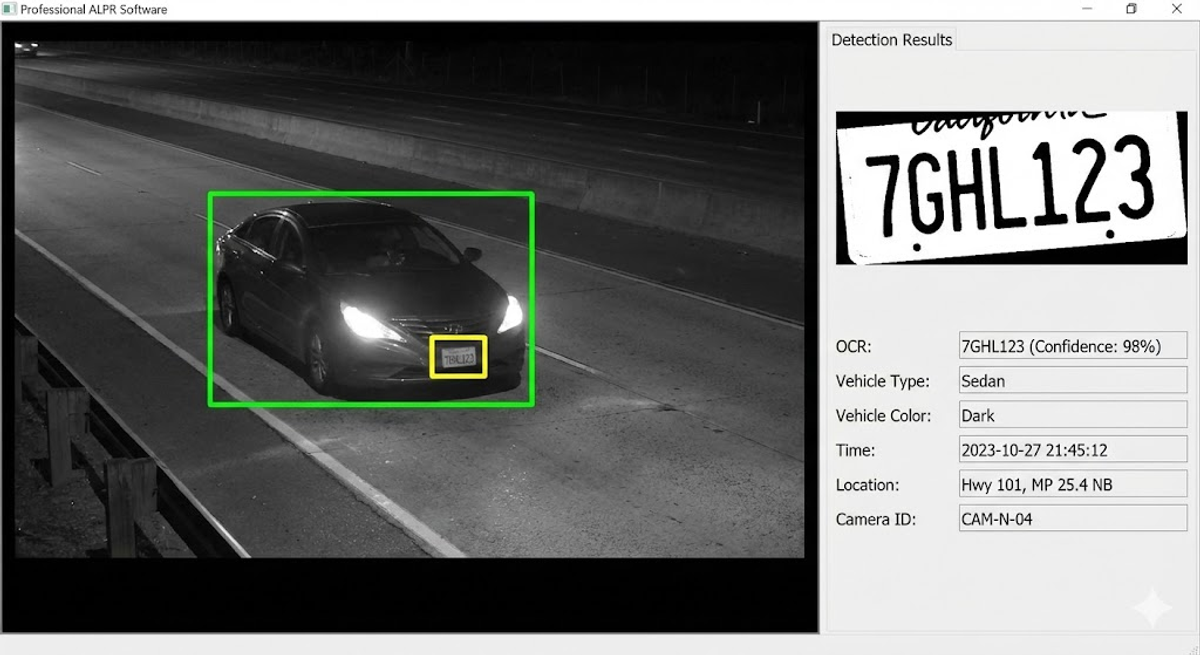
What gives ALPR data its power—and its risk—is the metadata attached to each observation: timestamps, locations, directions of travel, camera identifiers, vehicle attributes, and confidence scores.
This metadata enables pattern analysis, alerts, and historical searches. It’s also what makes ALPR sensitive from a privacy standpoint. Even when plate reads are imperfect, metadata can still be revealing when aggregated over time.
Understanding how this data is generated and stored is just as important as understanding how plates are read.
About accuracy (and why the numbers are misleading)
Accuracy is the question everyone asks first, and it’s also the question most often answered poorly.
There is no single accuracy number that applies across environments. Performance varies dramatically based on speed, lighting, camera placement, plate design, and confidence thresholds. Vendors can—and often do—quote impressive numbers by carefully defining what “counts” as a successful read.
In real deployments, the more useful question isn’t whether the system is perfect. It’s how predictable the errors are, how often they occur, and how they’re handled downstream.
That’s where responsible design lives.
Why understanding this matters
Once you understand how ALPR actually works, a lot of things become clearer. You can evaluate vendor claims more critically. You can reason about failure modes instead of being surprised by them. You can have more informed conversations about policy, retention, and oversight.
And this is still just the foundation.
There are deeper topics most public explanations never reach: why nighttime performance can exceed daytime accuracy, how multi-frame fusion changes error profiles, why some states are consistently harder to read than others, and how small design choices compound at scale.
Stay tuned for more!
Want the next one?
New posts and product updates. No spam.